Software is the set of instructions that the computer follows in performing a task.
The software can be of three types: system software, application software, and programming software.
1) System Software
The system software is the main software that runs the computer. When you turn on the computer, it activates the hardware and controls and coordinates their functioning. The application programs are also controlled by system software. An operating system is an example of system software.
system software
i) Operating System:
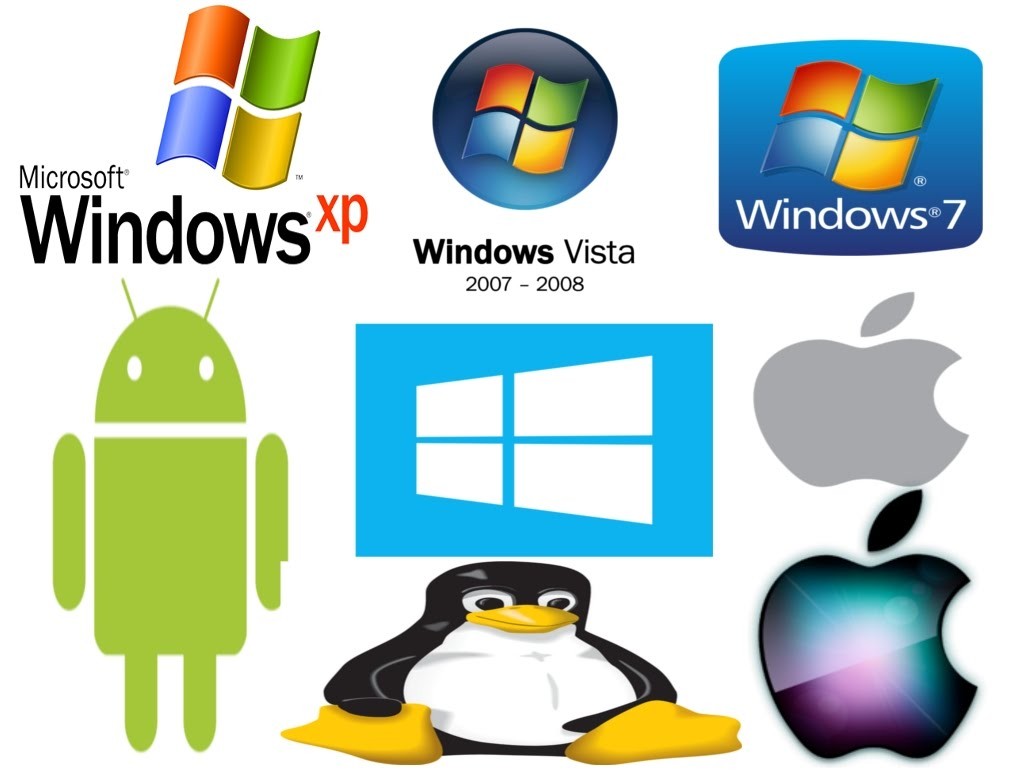
An operating system is the system software that works as an interface to enable the user to communicate with the computer. It manages and coordinates the functioning of hardware and software of the computer. The commonly used operating systems are Microsoft Windows, Linux, and Apple Mac OS X.
Some other examples of system software include:
BIOS: It stands for basic input output system. It is a type of system software, which is stored in Read Only Memory (ROM) located on the motherboard. However, in advanced computer systems, it is stored in flash memory. BIOS is the first software that gets activated when you turn on your computer system. It loads the drivers of the hard disk into memory as well as assists the operating system to load itself into the memory.
Boot Program: Boot refers to starting up a computer. When you switch on the computer, the commands in the ROM are executed automatically to load the boot program into memory and execute its instructions. The BIOS program has a basic set of commands that enables the computer to perform the basic input/output instructions to start the computer.
An assembler: It plays the role of a converter as it receives basic computer instructions and converts them into a pattern of bits. The processor uses these bits to perform basic operations.
A device driver: This system software controls hardware devices connected to a computer. It enables the computer to use the hardware by providing an appropriate interface. The kernel of a Computer’s CPU communicates with different hardware through this software. Operating systems generally come with most of the device drivers. If the operating system does not have a device driver for hardware, you have to install the device driver before using that hardware device.
2) Application Software:
Application software is a set of programs designed to perform a specific task. It does not control the working of a computer as it is designed for end-users. A computer can run without application software. Application software can be easily installed or uninstalled as required. It can be a single program or a collection of small programs. Microsoft Office Suite, Adobe Photoshop, and any other software like payroll software or income tax software are application software. As we know, they are designed to perform specific tasks. Accordingly, they can be of different types such as:
Word Processing Software: This software allows users to create, edit, format, and manipulate the text and more. It offers lots of options for writing documents, creating images, and more. For example, MS Word, WordPad, Notepad, etc.
Spreadsheet Software: It is designed to perform calculations, store data, create charts, etc. It has rows and columns, and the data is entered in the cell, which is an intersection of a row and column, e.g., Microsoft Excel.
Multimedia Software: These software are developed to perform editing of video, audio, and text. It allows you to combine texts, videos, audio, and images. Thus, you can improve a text document by adding photos, animations, graphics, and charts through multimedia software. For example, VLC player, Window Media Player, etc.
Enterprise Software: These software are developed for business operational functions. It is used in large organizations where the quantum of business is too large. It can be used for accounting, billing, order processing and more. For example, CRM (Customer Relationship Management), BI (Business Intelligence), ERP (Enterprise Resource Planning), SCM (Supply Chain Management), customer support system, and more.
3) Programming Software:
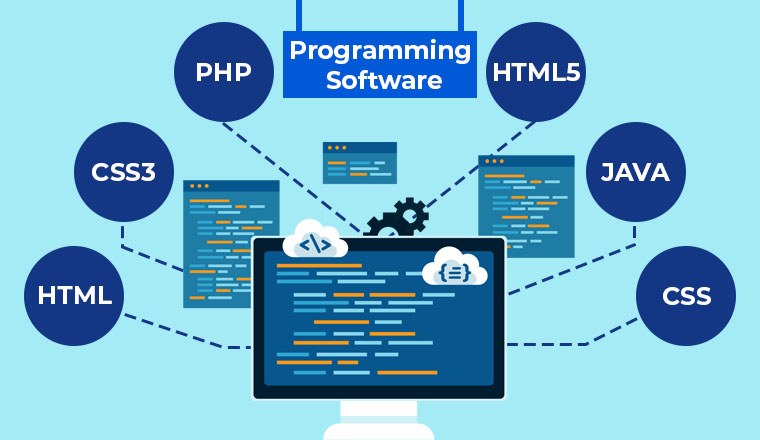
It is a set or collection of tools that help developers in writing other software or programs. It assists them in creating, debugging, and maintaining software or programs or applications. We can say that these are facilitator software that helps translate programming language such as Java, C++, Python, etc., into machine language code. So, it is not used by end-users. For example, compilers, linkers, debuggers, interpreters, text editors, etc. This software is also called a programming tool or software development tool.
Some examples of programming software include:
Eclipse: It is a java language editor.
Coda: It is a programming language editor for Mac.
Notepad++: It is an open-source editor for windows.
Sublime text: It is a cross-platform code editor for Linux, Mac, and Windows.
सॉफ्टवेयर क्या है? What is Software in computer?
सॉफ्टवेयर निर्देशों का सेट है, इसे कंप्यूटर प्रोग्राम भी कहा जाता है। सॉफ्टवेयर यूजर को कंप्यूटर और उसके हार्डवेयर के साथ जोड़ता है।
लेकिन यूजर computer software को छू नहीं सकता, वह केवल GUI के माध्यम से देख सकता है। यह हमारे कार्य को बहुत आसान बनाता है। इसके बिना तो अधिकांश कंप्यूटर बेकार है।
उदाहरण के लिए आप www.gveks.org का जो webpage पढ़ रहे है। वह एक सॉफ्टवेयर (इंटरनेट ब्राउज़र) पर दिखाया जा रहा है। बिना ऑपरेटिंग सिस्टम के आप किसी भी सॉफ्टवेयर (इंटरनेट ब्राउज़र) का उपयोग नहीं कर सकते है।
ऐसे कई प्रकार के सॉफ्टवेयर मौजूद है जैसे की excel का उपयोग करके आप spreadsheet तैयार कर सकते है, word के उपयोग से document editing का कार्य कर सकते है, फोटोशॉप का उपयोग करके photo editing और graphics designing का कार्य भी कर सकते है आदि।
आज की जरूरतों को देखर कई बड़ी-बड़ी सॉफ्टवेयर कंपनी सॉफ्टवेयर लॉन्च कर रही ताकि यूजर अपने कार्य को बहुत ही आसानी से और कम समय में कर सके।
हर प्रकार के काम के लिए हर प्रकार के सॉफ्टवेयर मौजूद है। जिनमें से कुछ कंपनी द्वारा फ्री में भी उपलब्ध कराये जाते है।
तो आइए what is software in computer के बाद जानेंगे की सॉफ्टवेयर कितने प्रकार के होते है-Types of software
Types of software in computer
System Software
Application Software
System Software
System software को कंप्यूटर सॉफ्टवेयर भी कहा जाता है। यह सॉफ्टवेयर computer hardware और application software को चलाने के लिए डिज़ाइन किया गया है।
इस सॉफ्टवेयर से कंप्यूटर के अन्य programs को execute किया जाता है। सिस्टम सॉफ्टवेयर user applications और hardware के बीच मध्य स्तर का कार्य करता है।
“Operating System” सिस्टम सॉफ्टवेयर का प्रकार है।
सिस्टम सॉफ्टवेयर के प्रकार – Types of system software
Operating system
Operating system सिस्टम सॉफ्टवेयर का एक महत्वपूर्ण उदाहरण है। यह software’s और उनके resources को संभालता है, और GUI (Graphical user interface) प्रदान करता है।
कई डिवाइस जैसे की desktop, laptop, और mobile phone को कार्य करने के लिए ऑपरेटिंग सिस्टम की आवश्यकता होती है। OS यह तय करता है कि यूजर सिस्टम से कैसे interact करता है।
OS कई प्रकार के होते है जैसे की Multitasking, Multi programming, Distributed, Real-Time आदि।
नीचे ऑपरेटिंग सिस्टम के कुछ उदाहरण दिए गए है।
Android
iOS
Linux
UNIX
MS windows
Mac OS
Ubuntu
Device Driver
Android मोबाइल फ़ोन का ऑपरेटिंग सॉफ्टवेयर है जो की लगभग सभी मोबाइल में उपयोग होता है। एंड्राइड Operating Software है और हम सब जो Apps, Google Play Store से डाउनलोड करते हैं वह Application Software कहलाते हैं।
example of operating system
Device Driver
Device Driver भी एक प्रकार का सिस्टम सॉफ्टवेयर है। इसका कार्य हार्डवेयर को कंट्रोल करना होता है और यह सिस्टम से जुड़ा रहता है।
हार्डवेयर डिवाइस कई प्रकार की होती है जैसे monitor, mouse, sound card, printer, और hard disks आदि devices को system से connect करने लिए device driver की जरुरत होती है।
यह दो प्रकार की होती है पहला Kernel device driver और दूसरा User device driver
नीचे डिवाइस ड्राइवर के कुछ उदाहरण दिए गए है।
BIOS Drive
Display Drivers
Printer Drivers
USB Drivers
ROM Drivers
Motherboard Drivers
VGA Drivers
Application software
सॉफ्टवेयर का दूसरा प्रकार है Application software यह सॉफ्टवेयर विशेष प्रकार से यूजर के लिए डिज़ाइन किये जाते है। जिसमें आप document editing का कार्य, letter typing का कार्य, गाना सुनना, और वीडियो देख सकते है।
इन सभी विशेष कार्य को करने के लिए अलग-अगल सॉफ्टवेयर की आवश्यकता होती है। उसके लिए सॉफ्टवेयर को उस विशेष कार्य के लिए डिज़ाइन किया जाता है। कंप्यूटर में ऑपरेटिंग सॉफ्टवेयर सभी application software को चलता है।
अगर system software और application software में तुलना की जाये, तो application software में user interface होता है। जिससे user को उसका उपयोग करना और समझना आसान होता है।
यूजर operating software को चला नहीं सकता न ही उसे देख सकता है। जबकि application software में यूजर GUI का उपयोग कर चला सकता है और देख भी सकता है। यूजर खुद से भी अपना software बना सकता है और उसका पर्सनल उपयोग भी कर सकते है।
यदि कंप्यूटर में Application software नहीं होगा तो कंप्यूटर यूजर के किसी काम का नहीं होगा। Application software का उपयोग mobile phone में भी किया जाता जिन्हें संक्षेप में “apps” भी कहा जाता है।
Application software कई प्रकार के होते है जैसे की आप MS word में document editing का कार्य कर सकते है, MS power point से presentation तैयार कर सकते है, MS Excel से spreadsheet बना सकते है, Photoshop से photo editing का काम कर सकते है, Browsing software (Firefox, Chrome आदि) का उपयोग करके इंटरनेट पर searching कर सकते है।
एप्लीकेशन सॉफ्टवेयर के प्रकार – Types of application software
Word processors software
इस प्रकार के एप्लीकेशन सॉफ्टवेयर का उपयोग documents में formatting, editing और printing आदि प्रकार के कार्य करने के लिए किया जाता है।
यह निम्न प्रकार के होते है।
Microsoft word
Abi word
Corel Word Perfect
Google Docs
Multimedia software
इस प्रकार के सॉफ्टवेयर का उपयोग वीडियो और ऑडियो फाइल्स तैयार करने के लिए किया जाता है। जिसमें आप video editing, animation और graphics आदि प्रकार के कार्य भी कर सकते है।
यह सॉफ्टवेयर निम्न प्रकार के होते है।
Windows Media Player
Windows Movie Maker
Adobe Photoshop
VLC Media Player
Multimedia software
Web Browser software
इस प्रकार के सॉफ्टवेयर का उपयोग करके आप इंटरनेट की मदद से searching करके किसी भी प्रकार की जानकारी प्राप्त कर सकते है।
यह सॉफ्टवेयर निम्न प्रकार के होते है।
Google Chrome
Internet Explorer
Mozilla firefox
UC Browser
Web Browser software
सॉफ्टवेयर कैसे बनाए जाते है, और यह कैसे काम करते है?
आप देखते होंगे कंप्यूटर में कई प्रकार के सॉफ्टवेयर मौजूद है। जिन्हें बनाने के लिए computer programmers की आवश्यकता होती है। यह programmers प्रोग्रामिंग भाषा का प्रयोग करके instructions लिखते है और एक data structure तैयार करते है।
उन्हीं निर्देशों के आधार पर सॉफ्टवेयर कार्य करते है। इन सभी programs को interpreter और compiler द्वारा मशीनी भाषा में बदला जाता है। ताकि उसे कंप्यूटर समझ सके।
फ्रीवेयर सॉफ्टवेयर क्या है? – What is a Freeware software?
Freeware software के नाम से आप जान सकते है यह सॉफ्टवेयर आप free में internet से download करके प्राप्त कर सकते है। इसको डाउनलोड करने में आपको किसी भी प्रकार का शुल्क नहीं देना होता है।
केवल आप उस सॉफ्टवेयर की official website पर जा कर अपनी id से login करके सॉफ्टवेयर को डाउनलोड कर सकते है और अपने कंप्यूटर में install कर सकते है।
A memory is just like a human brain. It is used to store data and instructions. Computer memory is the storage space in the computer, where data is to be processed and instructions required for processing are stored. The memory is divided into large number of small parts called cells. Each location or cell has a unique address, which varies from zero to memory size minus one. For example, if the computer has 64k words, then this memory unit has 64 * 1024 = 65536 memory locations. The address of these locations varies from 0 to 65535.
Memory is primarily of three types −
Cache Memory
Primary Memory/Main Memory
Secondary Memory
Cache Memory
Cache memory is a very high speed semiconductor memory which can speed up the CPU. It acts as a buffer between the CPU and the main memory. It is used to hold those parts of data and program which are most frequently used by the CPU. The parts of data and programs are transferred from the disk to cache memory by the operating system, from where the CPU can access them.
Advantages
The advantages of cache memory are as follows −
Cache memory is faster than main memory.
It consumes less access time as compared to main memory.
It stores the program that can be executed within a short period of time.
It stores data for temporary use.
Disadvantages
The disadvantages of cache memory are as follows −
Cache memory has limited capacity.
It is very expensive.
Primary Memory (Main Memory)
Primary memory holds only those data and instructions on which the computer is currently working. It has a limited capacity and data is lost when power is switched off. It is generally made up of semiconductor device. These memories are not as fast as registers. The data and instruction required to be processed resides in the main memory. It is divided into two subcategories RAM and ROM.
Characteristics of Main Memory
These are semiconductor memories.
It is known as the main memory.
Usually volatile memory.
Data is lost in case power is switched off.
It is the working memory of the computer.
Faster than secondary memories.
A computer cannot run without the primary memory.
Secondary Memory
This type of memory is also known as external memory or non-volatile. It is slower than the main memory. These are used for storing data/information permanently. CPU directly does not access these memories, instead they are accessed via input-output routines. The contents of secondary memories are first transferred to the main memory, and then the CPU can access it. For example, disk, CD-ROM, DVD, etc.
Characteristics of Secondary Memory
These are magnetic and optical memories.
It is known as the backup memory.
It is a non-volatile memory.
Data is permanently stored even if power is switched off.
It is used for storage of data in a computer.
Computer may run without the secondary memory.
Slower than primary memories.
मेमोरी क्या है?
कंप्यूटर मेमोरी एक डिवाइस होती है जिसका इस्तेमाल डेटा और सूचना को स्टोर करने के लिए किया जाता है.
दूसरे शब्दों में कहें तो, “Computer Memory कंप्यूटर का एक महत्वपूर्ण हिस्सा है जिसमें data को स्टोर करके रखा जाता है, बिना मेमोरी के कंप्यूटर काम नहीं करता.”
जिस प्रकार मनुष्य डेटा और सूचना को स्टोर करने के अपने दिमाग का इस्तेमाल करता है उसी प्रकार कंप्यूटर data (डेटा) और information (सूचना) को स्टोर करने के लिए memory का इस्तेमाल करता है.
सरल शब्दो में कहे तो “कंप्यूटर मेमोरी एक इलेक्ट्रॉनिक डिवाइस है जिसका इस्तेमाल प्रोग्राम और सूचनाओं को स्टोर करने के लिए किया जाता है। मेमोरी की मदद से कंप्यूटर अपने कार्यों को पूरा करता है. “
कंप्यूटर की मेमोरी को छोटे छोटे हिस्सों में विभाजित (divide) किया जाता है जिन्हे हम cell कहते है। इन Cell में डेटा बाइनरी (0,1) के रूप में स्टोर होता है.
कंप्यूटर मेमोरी इनपुट और आउटपुट दोनों प्रकार के डेटा को स्टोर करने में सक्षम होती है।
कंप्यूटर मेमोरी बहुत प्रकार की होती है- प्राइमरी मेमोरी (Primary memory), सेकेंडरी मेमोरी (Secondary memory) , कैश मेमोरी (Cache Memory) और रजिस्टर मेमोरी (Register memory). इन सभी मेमोरी के बारे में हम नीचे विस्तार से पढ़ेंगे।
1- प्राइमरी मेमोरी (Primary Memory)
प्राइमरी मेमोरी कंप्यूटर की मुख्य मेमोरी (main memory) होती है जो कंप्यूटर में मौजूद डेटा और सूचना (information) को स्टोर करती है।
दूसरे शब्दों में कहें तो, “प्राइमरी मैमोरी एक प्रकार की कंप्यूटर मेमोरी है जिसे CPU के द्वारा सीधे एक्सेस (access) किया जा सकता है।“
प्राइमरी मेमोरी को प्राइमरी स्टोरेज के नाम से भी जाना जाता है जो कंप्यूटर के मदरबोर्ड पर स्थित होती है। प्राइमरी मेमोरी को Semiconductor (अर्धचालक) पदार्थ से बनाया जाता है।
इस मेमोरी की स्टोरेज क्षमता सिमित (limited) होती है जिसके कारण यह बहुत कम मात्रा में डेटा को स्टोर कर पाती है। एक कंप्यूटर में प्राइमरी मेमोरी का साइज लगभग 4 GB होता है।
प्राइमरी मेमोरी Volatile और Non Volatile दोनों प्रकार की होती है। Volatile memory वह मेमोरी होती है जो कंप्यूटर के ON रहने तक ही डेटा को स्टोर करती है, कंप्यूटर के off होने पर इसमें रखा डेटा अपने आप डिलीट हो जाता है। Non-Volatile वह मेमोरी होती है जो हमेशा के लिए डेटा को स्टोर करके रखती है।
सेकेंडरी मेमोरी की तुलना में प्राइमरी मेमोरी महंगी होती है लेकिन यह तेज गति (speed) के साथ डेटा को एक्सेस करती है। इस मेमोरी के दो प्रकार होते है पहला RAM (रैंडम एक्सेस मेमोरी) और दूसरा ROM (रीड ओनली मेमोरी) .
प्राइमरी मेमोरी के प्रकार
(i). RAM (रैम)
RAM का पूरा नाम Random Access Memory (रैंडम एक्सेस मेमोरी) होता है। RAM में डेटा कंप्यूटर के ON रहने तक ही स्टोर रहता है, कंप्यूटर के OFF होने पर इसमें मौजूद डेटा अपने आप डिलीट हो जाता है। इसलिए इसे Volatile memory भी कहा जाता है।
RAM को सिस्टम मेमोरी, और रीड राइट मेमोरी के नाम से भी जाना जाता है। इसमें डेटा को एक्सेस करने के लिए बिजली की आवश्यकता पड़ती है। यदि कंप्यूटर बंद हो जाता है या बिजली चली जाती है तो इसमें मौजूद सारा डेटा डिलीट हो जाता है।
कंप्यूटर RAM में मौजूद डेटा को तेज गति के साथ एक्सेस करता है जिसके कारण कंप्यूटर तेजी से कार्यो को पूरा कर पाता है।
RAM के दो प्रकार होते है पहला SRAM (स्टेटिक रैंडम एक्सेस मेमोरी) और दूसरा DRAM (डायनामिक रैंडम एक्सेस मैमोरी) .
RAM का चित्र
(ii). ROM (रोम)
ROM का पूरा नाम Read Only Memory (रीड ओनली मेमोरी) होता है। यह एक non volatile मैमोरी है जिसका मतलब यह है कि यह हमेशा के लिए डेटा को स्टोर करके रखती है।
यदि बिजली चली जाती है और कंप्यूटर बंद हो जाता है तो भी ROM में मौजूद डेटा डिलीट नही होता। इस मेमोरी में डेटा को permanently (हमेशा के लिए) स्टोर किया जा सकता है लेकिन RAM में हम ऐसा नहीं कर सकते।
ROM के तीन प्रकार होते है पहला PROM (प्रोग्रामेबल रीड ऑनली मैमोरी) दूसरा EPROM (एरेजेबल प्रोग्रामेबल रीड ऑनली मैमोरी) और तीसरा EEPROM (इलेक्ट्रिकली इरेजेबल प्रोग्रामेबल रीड ऑनली मैमोरी)
प्राइमरी मेमोरी की विशेषताएं (Characteristics of Primary Memory in Hindi)
प्राइमरी मेमोरी में मौजूद डेटा को तेज गति के साथ एक्सेस किया जा सकता है।
कैश मेमोरी (cache memory) के बाद प्राइमरी मेमोरी की ही स्पीड सबसे ज्यादा होती है।
इसका इस्तेमाल कंप्यूटर को ON करने और प्रोग्राम को run करने के लिए किया जाता है.
यह semiconductor (अर्धचालक) प्रदार्थ से बनी होती है.
प्राइमरी मेमोरी मदरबोर्ड में स्थित होती है.
यह मेमोरी ज्यादा मात्रा में डेटा को स्टोर नहीं कर सकती क्योकि इसकी स्टोरेज क्षमता (storage capacity) बहुत कम होती है।
प्राइमरी मेमोरी सीधे CPU के साथ संचार (communication) करती है।
2 – Secondary Memory (सेकेंडरी मेमोरी)
सेकेंडरी मेमोरी भी कंप्यूटर की एक मेमोरी है जिसे CPU के द्वारा सीधे (direct) एक्सेस नहीं किया जा सकता। सेकेंडरी मेमोरी कंप्यूटर का हिस्सा नहीं होती है इसे कंप्यूटर में अलग से जोड़ा जाता है।
सेकेंडरी मेमोरी एक प्रकार की non-volatile मेमोरी है अर्थात् इसमें डेटा हमेशा के लिए स्टोर रहता है यानी कि अगर कंप्यूटर बंद भी हो जाए तो इसका डेटा डिलीट नही होता।
Secondary memory का इस्तेमाल permanent डेटा को स्टोर करने के लिए किया जाता है ताकि भविष्य में यूजर उस डेटा का उपयोग कर सके।
प्राइमरी मेमोरी की तुलना में सेकेंडरी मेमोरी की स्टोरेज क्षमता अधिक होती है जिसके कारण यह ज्यादा मात्रा में डेटा को स्टोर कर सकती है।
इस मेमोरी का इस्तेमाल बड़े आकार वाले डेटा जैसे (वीडियो, इमेज, ऑडियो, फाइल) को स्टोर करने के लिए किया जाता है। इस मेमोरी में यदि बिजली चली जाती है तो भी डेटा डिलीट नहीं होता।
CPU सीधे सेकेंडरी मेमोरी को एक्सेस नहीं कर सकता। इसे ऐसा करने के लिए सेकेंडरी मेमोरी के डेटा को प्राइमरी मेमोरी में ट्रांसफर करना होगा इसके बाद CPU सेकडरी मेमोरी को एक्सेस कर पायेगा।
इस मेमोरी को एक्सटर्नल मेमोरी या सहायक मेमोरी भी कहते है। इस मेमोरी में हम डेटा को एक कंप्यूटर से दूसरे कंप्यूटर में ट्रांसफर कर सकते है।
यह मेमोरी प्राइमरी मेमोरी की तुलना में काफी सस्ती होती है। सेकेंडरी में मेमोरी के कुछ उदहारण :- हार्ड डिस्क , pendrive , DVD, CD, और मैग्नेटिक टेप आदि।
सेकेंडरी मेमोरी की विशेषताएं (Characteristics of Secondary Memory in Hindi)
यह मेमोरी अधिक मात्रा में डेटा को स्टोर कर सकती है। इसकी स्टोरेज क्षमता अधिक होती है।
इसमें बिजली चले जाने पर डेटा डिलीट नहीं होता।
यह प्राइमरी मेमोरी की तुलना में सस्ती होती है।
इस मेमोरी की स्पीड धीमी (slow) होती है।
इसके डेटा को एक कंप्यूटर से दूसरे कंप्यूटर में आसानी से ट्रान्सफर कर सकते हैं.
इस मेमोरी को CPU के द्वारा सीधे (direct) एक्सेस नहीं किया जा सकता।
3- Cache Memory (कैश मेमोरी)
Cache Memory एक तेज गति से काम करने वाली मेमोरी है जिसका इस्तेमाल सीपीयू की स्पीड तथा परफॉरमेंस को बढ़ाने के लिए किया जाता है।
कैश मेमोरी एक हाई-स्पीड मेमोरी है जिसका आकार तो छोटा होता है लेकिन प्राइमरी मेमोरी से तेज होती है।
इस मेमोरी को एक्सेस करना आसान है और CPU इसे तेज गति से एक्सेस करता है। इस मेमोरी को अन्य डिवाइस के द्वारा एक्सेस नहीं किया जा सकता बल्कि इसे केवल CPU के द्वारा ही एक्सेस किया जा सकता है।
कैश मेमोरी में उस डेटा या फाइलों को स्टोर किया जाता है जिनका इस्तेमाल CPU नियमित रूप से करता है। जब भी सीपीयू को कोई डेटा चाहिए होता है तो सीपीयू सबसे पहले उस डेटा को कैश मेमोरी में ढूंढता है।
कैश मैमोरी के प्रकार –
इसके तीन प्रकार होते हैं:-
L1 Cache
L2 Cache
L3 Cache
L1 Cache
यह एक छोटी मेमोरी होती है जिसका आकार 2KB से 64 KB तक होता है। L1 cache में दो प्रकार के cache होते हैं पहला निर्देश कैश (instruction cache) जो CPU द्वारा आवश्यक निर्देशों को स्टोर करते है और दूसरा डेटा कैश (data cache) जो CPU द्वारा आवश्यक डेटा को स्टोर करते है।
L2 Cache
L2 cache का साइज़ L1 cache से थोडा बढ़ा होता है और इसकी स्पीड L1 cache से थोड़ी कम होती है। इसका आकार 256 kb से 512 kb के बीच होता है।
L3 Cache
यह साइज में L1 cache और L2 cache से थोड़ी बड़ी होती है और इसकी स्पीड L1 cache और L2 cache मेमोरी से थोड़ी कम होती है। इसका आकार 1 MB से 8 MB तक होता है।
कैश मैमोरी की विशेषताएं (Characteristics of Cache Memory in Hindi)
Cache Memory प्राइमरी मेमोरी से भी अधिक Fast (तेज) होती है.
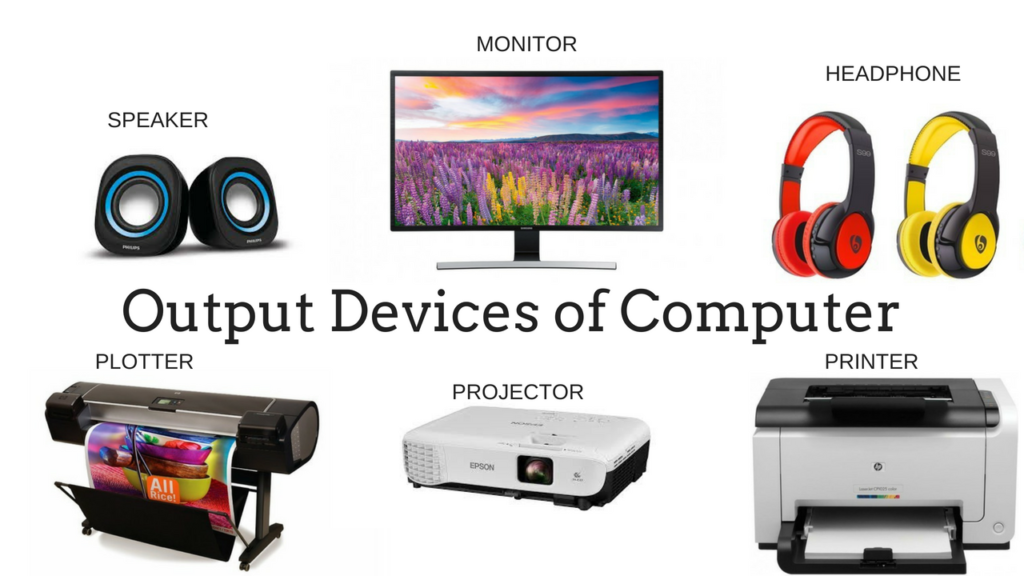
Devices which are used along with a computer to display the result are called output devices. The main output devices are monitor, printer, speaker, headphones and projector.
OUTOUT
Following are some of the important output devices used in a computer.
Monitors
Graphic Plotter
Printer
Monitors
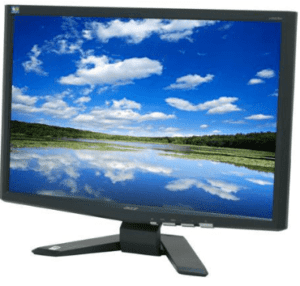
Monitors, commonly called as Visual Display Unit (VDU), are the main output device of a computer. It forms images from tiny dots, called pixels that are arranged in a rectangular form. The sharpness of the image depends upon the number of pixels.
There are two kinds of viewing screen used for monitors.
Cathode-Ray Tube (CRT)
Flat-Panel Display
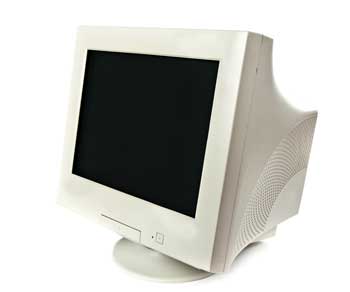
Cathode-Ray Tube (CRT) Monitor
The CRT display is made up of small picture elements called pixels. The smaller the pixels, the better the image clarity or resolution. It takes more than one illuminated pixel to form a whole character, such as the letter ‘e’ in the word help.
A finite number of characters can be displayed on a screen at once. The screen can be divided into a series of character boxes – fixed location on the screen where a standard character can be placed. Most screens are capable of displaying 80 characters of data horizontally and 25 lines vertically.
There are some disadvantages of CRT −
Large in Size
High power consumption
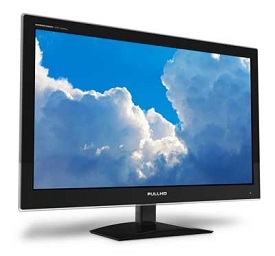
Flat-Panel Display Monitor
The flat-panel display refers to a class of video devices that have reduced volume, weight and power requirement in comparison to the CRT. You can hang them on walls or wear them on your wrists. Current uses of flat-panel displays include calculators, video games, monitors, laptop computer, and graphics display.
The flat-panel display is divided into two categories −
Emissive Displays − Emissive displays are devices that convert electrical energy into light. For example, plasma panel and LED (Light-Emitting Diodes).
Non-Emissive Displays − Non-emissive displays use optical effects to convert sunlight or light from some other source into graphics patterns. For example, LCD (Liquid-Crystal Device).
Printers
Printer is an output device, which is used to print information on paper.
There are two types of printers −
Impact Printers
Non-Impact Printers
Impact Printers
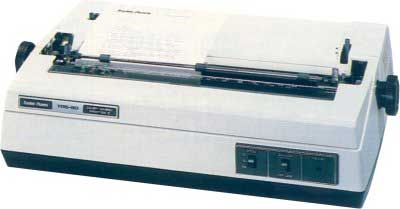
Impact printers print the characters by striking them on the ribbon, which is then pressed on the paper.
Characteristics of Impact Printers are the following −
Very low consumable costs
Very noisy
Useful for bulk printing due to low cost
There is physical contact with the paper to produce an image
These printers are of two types −
Character printers
Line printers
Character Printers
Character printers are the printers which print one character at a time.
These are further divided into two types:
Dot Matrix Printer(DMP)
Daisy Wheel
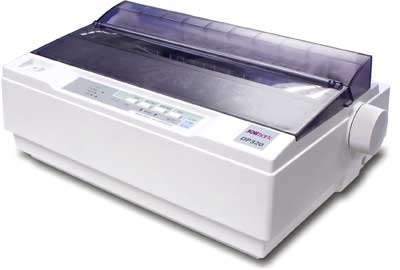
Dot Matrix Printer
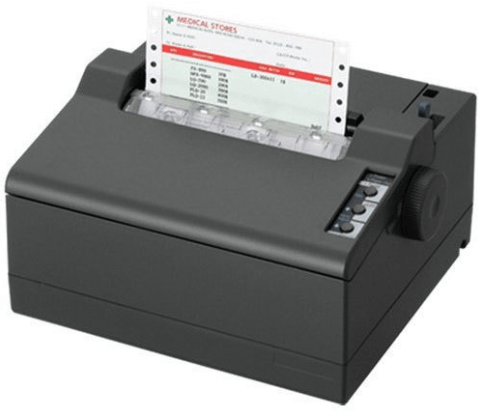
In the market, one of the most popular printers is Dot Matrix Printer. These printers are popular because of their ease of printing and economical price. Each character printed is in the form of pattern of dots and head consists of a Matrix of Pins of size (5*7, 7*9, 9*7 or 9*9) which come out to form a character which is why it is called Dot Matrix Printer.
Advantages
Inexpensive
Widely Used
Other language characters can be printed
Disadvantages
Slow Speed
Poor Quality
Daisy Wheel
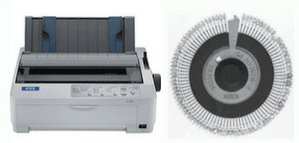
Head is lying on a wheel and pins corresponding to characters are like petals of Daisy (flower) which is why it is called Daisy Wheel Printer. These printers are generally used for word-processing in offices that require a few letters to be sent here and there with very nice quality.
Advantages
More reliable than DMP
Better quality
Fonts of character can be easily changed
Disadvantages
Slower than DMP
Noisy
More expensive than DMP
Line Printers
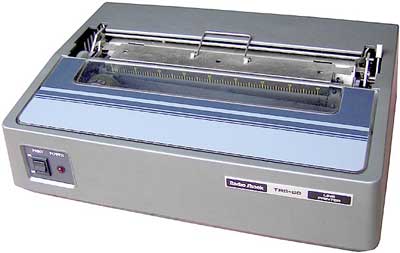
Line printers are the printers which print one line at a time.
These are of two types −
Drum Printer
Chain Printer
Drum Printer
This printer is like a drum in shape hence it is called drum printer. The surface of the drum is divided into a number of tracks. Total tracks are equal to the size of the paper, i.e. for a paper width of 132 characters, drum will have 132 tracks. A character set is embossed on the track. Different character sets available in the market are 48 character set, 64 and 96 characters set. One rotation of drum prints one line. Drum printers are fast in speed and can print 300 to 2000 lines per minute.
Advantages
Very high speed
Disadvantages
Very expensive
Characters fonts cannot be changed
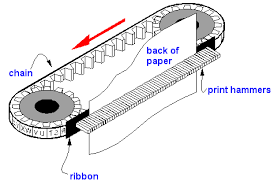
Chain Printer
In this printer, a chain of character sets is used, hence it is called Chain Printer. A standard character set may have 48, 64, or 96 characters.
Advantages
Character fonts can easily be changed.
Different languages can be used with the same printer.
Disadvantages
Noisy
Non-impact Printers
Non-impact printers print the characters without using the ribbon. These printers print a complete page at a time, thus they are also called as Page Printers.
These printers are of two types −
Laser Printers
Inkjet Printers
Characteristics of Non-impact Printers
Faster than impact printers
They are not noisy
High quality
Supports many fonts and different character size
Laser Printers
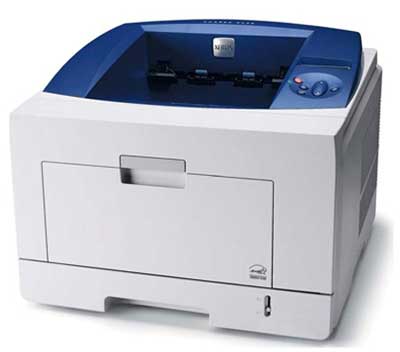
These are non-impact page printers. They use laser lights to produce the dots needed to form the characters to be printed on a page.
Advantages
Very high speed
Very high quality output
Good graphics quality
Supports many fonts and different character size
Disadvantages
Expensive
Cannot be used to produce multiple copies of a document in a single printing
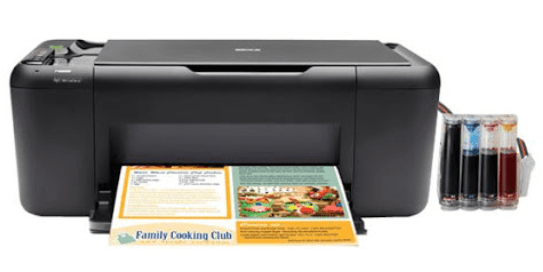
Inkjet Printers
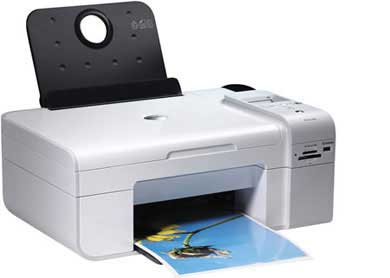
Inkjet printers are non-impact character printers based on a relatively new technology. They print characters by spraying small drops of ink onto paper. Inkjet printers produce high quality output with presentable features.
They make less noise because no hammering is done and these have many styles of printing modes available. Color printing is also possible. Some models of Inkjet printers can produce multiple copies of printing also.
Advantages
High quality printing
More reliable
Disadvantages
Expensive as the cost per page is high
Slow as compared to laser printer.
OUTPUT
कंप्यूटर में input devices द्वारा जो डाटा भेजा जाता है और CPU द्वारा उस डाटा को process किया जाता है, processing के बाद जो Output (result) प्राप्त होता है। उसे computer output device की सहायता से प्राप्त किया जाता है।
यह output हमें कई प्रकार से प्राप्त होता है जैसे की Monitor screen पर जानकारी को पढ़ सकते है, वीडियो देख सकते है, प्रिंटर से print निकल सकते है, और स्पीकर से गाने सुन सकते है आदि।
आउटपुट डिवाइस के प्रकार – Types of Output devices with example
• Monitor • Printer • Projector
Meaning of Monitor in Hindi
Monitor का नाम ज्यादातर कंप्यूटर के साथ जोड़ा जाता है। इसका आकार दिखने में तो टीवी जैसा होता है। लेकिन हिंदी में मॉनिटर का मतलब उपदेश करना होता है।
इसके बारे में आगे आपको बताएंगे कंप्यूटर में मॉनिटर की क्या भूमिका है (What is Monitor in computer)
मॉनिटर क्या है? – What is Monitor in computer
मॉनिटर एक महत्वपूर्ण Output device है। इसे visual display unit भी कहा जाता है। इसका उपयोग कंप्यूटर में output display करने के लिए किया जाता है, मॉनिटर के कंप्यूटर अधूरा है। यह आउटपुट को अपनी स्क्रीन पर soft copy के रूप प्रदर्शित करता है।
मॉनिटर के प्रकार – Types of Monitor
CRT मॉनिटर
LCD मॉनिटर
LED मॉनिटर
Plasma मॉनिटर
CRT Monitor
CRT का पूरा नाम Cathode Rays Tube है। CRT Monitor में किसी picture को जनरेट करने के लिए Cathode tube का उपयोग किया जाता है। यह tube केमिकल फॉर्म में होती है। इसके फ्लैट सर्फेस में फास्फोरस का लेप होता है। यहां सरफेस नंबर ऑफ dots में विभाजित होती है। जिससे “Pixels” कहते हैं।
CRT Monitor
Cathode tube के अंत में electron gun होती है। जिसके द्वारा electron beams जनरेट किए जाते हैं। एवं इस electron beams के आगे इलेक्ट्रो मैग्नेटिक फील्ड जनरेट की जाती हैं। जिससे इलेक्ट्रॉन की दिशा निर्देशित की जाती है।
जब यह जनरेट इलेक्ट्रॉन फास्फोरस सरफेस से टकराते हैं। तो चमक उठते हैं। तब हमें screen पर image एवं text आदि दिखाई देते हैं।
इलेक्ट्रॉन beams तीन प्रकार के होते है। जो स्क्रीन पर वार करते है- लाल, हरा और नीला इसलिए, जो रंग आप स्क्रीन पर देखते हैं, वे लाल, नीले और हरे रंग के प्रकाश के मिश्रण होते हैं।
Magnetic field इलेक्ट्रान के beams का मार्गदर्शन करता है। हालांकि एलसीडी मॉनिटर ने CRT मॉनिटर की जगह लेली है। लेकिन CRT मॉनिटर अभी भी उसकी color quality के कारण graphics professionals द्वारा ज्यादा उपयोग किये जा रहे है।
LCD Monitor
LCD Monitor
इसका का पूरा नाम Liquid Crystal Display है। एल सी डी मॉनिटर को फ्लैट पैनल स्क्रीन (Flat panel screen) भी कहा जाता है। जो CRT मॉनिटर की तुलना में compact और lightweight है।
यह लिक्विड क्रिस्टल डिस्प्ले technique पर आधारित होती है। जिसका उपयोग Laptop, Tablet और Smartphone आदि की स्क्रीन में किया जाता है।
एलसीडी स्क्रीन में ध्रुवीयकृत ग्लास (polarized glass) की दो परतें होती हैं, जिनके बीच एक लिक्विड क्रिस्टल सॉल्यूशन होता है। liquid crystal display screen में pixels का एक matrix होता है। जो स्क्रीन पर image display करता है।
LED Monitor
LED मॉनिटर एल सी डी Output Device का improved version है। इसका पूरा नाम Light Emitting Diode है। इसमें भी flat panel display होता है। और एलसीडी मॉनिटर जैसी liquid crystal display technique का उपयोग किया गया है। Liquid Crystal Display मॉनिटर में कई LED panel होते है और प्रत्येक panel में डिस्प्ले को बैकलाइट करने के लिए कई LED होते है।
LED Monitor
जबकि एल सी डी मॉनिटर डिस्प्ले को बैकलाइट करने के लिए CCFL (Cold Cathode Fluorescent Light) का उपयोग करते है।
आज कल के electronic devices जैसे की smart phones, laptops, LED TVs और computer screen एल ई डी display का उपयोग करते है।
क्योंकि यह अधिक चमक और अधिक से अधिक प्रकाश का तेजी से निर्माण करते है, और काम बिजली की खपत भी करते है।
Plasma Monitor
Plasma Monitor
प्लास्मा मॉनिटरभी एक flat panel display है। जो Plasma डिस्प्ले technology पर आधारित है। इसमें दो glass पैनल के बीच छोटी छोटी कोशिकाएँ (cells) होती हैं। इन कोशिकाओं में noble gases का मिश्रण और mercury की थोड़ी मात्रा होती है।
जब voltage apply किया जाता है तो कोशिकाओं में मौजूद gas, plasma में बदल जाती हैं और ultraviolet light निकलती है। जो स्क्रीन पर image बनाती है।
प्लाज्मा डिस्प्ले LCD की तुलना में शानदार होते हैं और एल सी डी की तुलना में wide viewing angle पेश करते हैं। इसमें 1920 x 1080 तक के high-resolution होते हैं।
प्रिंटर क्या है? – What is Printer
प्रिंटर एक Output Device है। प्रिंटर का उपयोग output को पेपर या वास्तु के रूप में प्राप्त करने के लिए करते है, या फिर इसकी सहायता से किसी भी प्रकार की soft copy को hard copy में convert कर सकते है। तकनीकी के आधार पर प्रिंटर को दो भागों में बांटा गया है-
प्रिंटर के प्रकार – Types of Printer
Impact Printers
Non-impact printers
Impact printer
Impact printer प्रत्येक प्रिंट को हिट के द्वारा प्रिंट करते हैं। सामान्यता यह प्रिंटर हैमर (Hammer) का प्रयोग करते है। Impact printer निम्न प्रकार के होते हैं-
Character Printers
Line Printers
Character Printers
यह एक बार में एक ही कैरेक्टर प्रिंट करता है। यह एक बार में एक लाइन प्रिंट नहीं करता डॉट मैट्रिक्स प्रिंटर और डेजी व्हील प्रिंटर कैरेक्टर प्रिंटर होते हैं। आज यह प्रिंटर कम गति के कारण अधिक उपयोग में नहीं आते। क्योंकि यह single character प्रिंट करते है। करैक्टर प्रिंटर निम्न प्रकार के होते है-
Dot Matrix Printer
Daisy wheel printer
Dot Matrix Printer
Dot Matrix Printer एक इंपैक्ट प्रिंटर कहलाता है इसके प्रिंट हैड में पिनो का एक matrix होता है। इन पिनो के रिबन से टकराने से कागज पर प्रिंटिंग होती है
इसमें छोटे-छोटे बिंदुओं से मिलकर अक्षरों का निर्माण होता है इनके प्रिंटिंग हैड में 9,14,18 या 24 पिनो का horizontal group होता है।
एक बार में एक कलम की पिन हैड से बाहर निकलकर dots को छापती है जिससे एक अक्षर अनेक चरणों में बनता है इस प्रकार प्रिंटिंग हैड लाइन की दिशा में आगे खिसकता जाता है।
इसमें प्रिंटिंग हैड को कंप्यूटर के द्वारा नियंत्रित किया जाता है। इनकी प्रिंटिंग गति 30 से 600 अक्षर प्रति second होती है। यह प्रिंटर दोनों दिशा में प्रिंटिंग करते हैं।
यह प्रिंटर printing quality के आधार पर दो प्रकार के होते हैं।
Draft quality printing – इसमें सामान्य छपाई होती है। Near letter quality printing – इस प्रिंटिंग में एक अक्षर को दो बार छापा जाता है। इसकी प्रिंटिंग गति धीमी होती है।
Dot Matrix Printer
Advantage of Dot matrix printer
इसमें printing निकालना सस्ता होता है।
इसमें किसी भी स्टाइल, साइज में प्रिंटिंग निकाली जा सकती है।
यह graphics को भी print कर सकता है। इसकी quality बहुत poor होती है।
Dot Matrix printer 100 से 500 कैरेक्टर प्रति सेकंड प्रिंट कर सकता है।
यह दोनों दिशाओं में print कर सकता है।
Disadvantages of Dot matrix printer
यह एक noisy प्रिंटर है।
इसकी लेटर quality poor होती है।
इसमें color की संभावना भी लिमिटेड होती है।
Daisy wheel printer
यह एक solid font printer और impact प्रिंटर है। इसका अविष्कार David S. Lee ने डिएब्लो डाटा सिस्टम में किया था। इसका नाम Daisy wheel इसलिए पड़ा, क्योंकि इसके प्रिंटिंग हैड की आकृति गुलबहार फूल (Daisy) के समान होता है।
Daisy wheel प्रिंटर धीमी गति का प्रिंटर है। लेकिन इसकी प्रिंटिंग quality अच्छी होती है। इसलिए इसका प्रयोग पत्र छपने के लिए किया जाता है। इसको Letter Quality Printer भी कहते है।
Daisy Wheel Printer
प्रिंट करने का तरीका
इस प्रिंटर में हैड एक व्हील होता है। जिसमें बहुत सारे spoke लगे होते है। किसी character को प्रिंट करने के लिए व्हील एक्सेस में चारों ओर घूमता है। जब भी उचित कैरेक्टर हैमर के सामने आता है।
तब हैमर spoke के अंदर हिट करता है और कैरेक्टर पेपर पर दिखता है। जो कि ribbon के विपरीत होता है।
Advantages of Daisy wheel printer
यह एक letter quality प्रिंटर है क्योंकि इसकी प्रिंटिंग quality अच्छी होती है।
डेजी व्हील प्रिंटर 1 मिनट में 50 से 100 करैक्टर प्रिंट करता है। जो कि मैनुअल टाइपिंग की तुलना में बहुत तेज है।
Disadvantages of Daisy wheel printer
यह एक noisy प्रिंटर है।
यह graphics एवं drawing की प्रिंटिंग को support नहीं करता है।
Line Printer
यह high speed इम्पैक्ट प्रिंटर है। जो एक बार में एक लाइन प्रिंट करता है। बड़े कंप्यूटर के लिए हाई स्पीड प्रिंटर की आवश्यकता होती है।
क्योंकि यह प्रति सेकंड 500 से 3000 लाइनों को प्रिंट करता है। Drum प्रिंटर और Chain प्रिंटर लाइन प्रिंटर के उदहारण है।
Drum Printer
यह एक letter quality एवं लाइन प्रिंटर है यह एक बार में पूरी लाइन प्रिंट करता है इस प्रिंटर में एक ड्रम का उपयोग किया जाता है जो अपनी जगह पर रोटेट करता है ड्रम के सर फेस पर नंबर ऑफ कैरेक्टर होते हैं जो कि मिरर इमेज में होते हैं प्रत्येक row कुछ कैरेक्टर होते है।
ये प्रिंटर लाइन के हिसाब से बहुत सारे हैमर उपयोग करता है यदि ड्रम प्रिंटर में 80 कॉलम है तो यह 80 हैमर रखता है।
प्रिंट करने का तरीका
Drum एक्सेस पर rotate करता है। जब लाइन का उचित कैरेक्टर हैमर के सामने आता है। तब यह हैमर ribbon पर हिट करता है। जो कि Drum पर मार्क होते हैं। तब एक कैरेक्टर प्रिंट होता है।
Drum Printer
Advantages of Drum printer
यह एक सेकंड में 10 से 50 लाइन प्रिंट करता है।
यह एक letter quality प्रिंटर है।
Disadvantages of Drum printer
यह एक noisy printer है।
यह प्रिंटर महंगे होते है।
इसमें करैक्टर एवं size एवं स्टाइल को बदलने के लिए पुरे ड्रम को बदलना पड़ता है।
इस प्रिंटर के graphics द्वारा प्रिंटिंग संभव नहीं है।
Chain Printer
यह भी एक Letter quality प्रिंटर है। इस प्रिंटर में एक chain का उपयोग होता है। जो कि कैरेक्टर को प्रिंट करती है। इसमें करैक्टर mirror image के रूप में होता है। यह चैन दो चकों पर भारित होती है। जोकि उसे rotate करते हैं। एक हैमर का उपयोग एक लाइन में कैरेक्टर को प्रिंट करने के लिए किया जाता है।
प्रिंटिंग करने का तरीका
जब Chain का उचित कैरेक्टर लाइन की सही जगह पर आता है। तब हैमर कैरेक्टर को move करता है। एवं हिट करता है।यह चैन का कैरेक्टर हिट रिबन पर हिट करता है। तब कैरेक्टर पेपर पर दिखाई देता है। जोकि इंक रिबन के विपरीत में होता है।
Chain Printer
Advantages of chain printer
यह ड्रम प्रिंटर की तुलना में सस्ता होता है।
यह 9 से 20 लाइन प्रति सेकंड प्रिंट करता है।
Disadvantages of chain printer
यह noisy printer है।
इसमें कैरेक्टर का size एवं style बदलने के लिए चेन को बदलना पड़ता है।
चैन प्रिंटर में graphics printing संभव नहीं होती।
इसमें कुछ लिमिटेड कलर ही प्रयोग कर सकते हैं।
Non-Impact printer
Non-Impact printer को पेज प्रिंटर भी कहा जाता है। क्योंकि यह प्रिंटर एक बार में एक पेज प्रिंट करते हैं। इसमें character और image को प्रिंट करने के लिए ribbon का उपयोग नहीं किया जाता है। Impact printer की तुलना में इसकी प्रिंटिंग quality ज्यादा अच्छी होती है।
Non-Impact printer निम्न प्रकार के होते हैं-
Inkjet Printer
Laser Printer
Inkjet printer
यह एक Non-Impact printer है। जो कागज पर स्याही का छिड़काव करके Hard copy को प्रिंट करता है। यह छोटे-छोटे dots के साथ चित्र बनाते हैं।
यह printer कम से कम 300 DPI (Dot per inch) resolution के साथ page को प्रिंट कर सकता है। कुछ नये inkjet printer 600 DPI या अधिक पर पूर्ण रंग की hard copy print कर सकते हैं।
प्रिंटिंग करने का तरीका
Inkjet printer के प्रिंट head में कई छोटे nozzles (नलिका)होते है। जिन्हे jet भी कहा जाता है। जैसे ही पेपर, प्रिंट head के आगे बढ़ता है। nozzles उस पर स्याही spray करता है। जिससे अक्षर और चित्र बनते है।
आमतौर पर एक Inkjet printer 100 से कई ज्यादा पेज को प्रिंट कर सकता है। लेकिन यह hard copy की प्रकृति पर निर्भर करता है।
Inkjet Printer
Advantages of Inkjet printer –
यह output device of computer का color प्रिंटर है, जो कि सभी कलर में image को प्रिंट कर सकता है।
यह printer सभी character को किसी भी size एवं style में प्रिंट कर सकता है। यह प्रिंटर सस्ते होते हैं।
Inkjet प्रिंटर graphics print कर सकता है।
इनकी कीमत अन्य प्रिंटर की अपेक्षा कम होती है
Disadvantages of Inkjet printer –
इसकी ink बहुत costly होती है
इसकी प्रिंटिंग speed अन्य प्रिंटर की तुलना में कम होती है
यदि प्रिंटर को कुछ दिनों तक उपयोग न किया जाये तो इनकी ink nozzle block हो जाती है जिसे फिर cleaner run करके साफ़ करना पड़ता है।
Laser printer
लेजर प्रिंटर high speed page printer होते है। एवं लेटर quality प्रिंटर होते है इसका प्रयोग कंप्यूटर में 1970 के दशक से किया जा रहा है। पहले ये mainframe computer में प्रयोग किये जाते थे।
1980 में इसकी कीमत 3000 डॉलर थी। और फिर इनका प्रयोग microcomputer में किया जाने लगा। आजकल यह सबसे ज्यादा लोगप्रिय प्रिंटर है। क्योकि इसकी प्रिंटिंग quality और speed अच्छी है।
Laser printer ज़ेरोग्राफी तकनीकी के आधार पर कार्य करता है। ज़ेरोग्राफी तकनीकी का विकास जेरॉक्स मशीन के लिए हुआ था। ज़ेरोग्राफी एक फोटोग्राफी तकनीक है। जिसमें फिल्म एक आवेशित पदार्थ का लेपन युक्त ड्रम होता है। यह ड्रम फोटो संवेदित होता है। इसके द्वारा कागज पर output को छापा जाता है।
प्रिंटिंग करने का तरीका-
लेजर प्रिंटर में प्रिंटिंग लेजर किरण के द्वारा किया जाता है। इसमें लेजर किरण Lens द्वारा एक घूमते हुए बहुभुजाकार दर्पण पर फोकस की जाती है। जहां से reflect होकर आउटपुट की लेजर किरण लेंस द्वारा पुनः एक अन्य दर्पण पर फोकस की जाती है। फिर से reflect होकर यह किरण ड्रम पर गिरती है।
यह किरण ड्रम पर छापने वाली लाइनों के रूप में डालता है। जब यह ड्रम घूमता है। तो आवेशित स्थानों पर टोनर चिपक जाता है। इसके बाद यह टोनर कागज पर स्थानांतरित हो जाता है।
जिससे आउटपुट कागज पर छप जाता है। यह output अस्थाई होता है। इसको स्थाई करने के लिए इसको गर्म रोलर के बीच से गुजारा जाता है। जिससे यह प्रिंटिंग स्थाई हो जाती है।
अधिकतर लेजर प्रिंटर में microprocessor, RAM and ROM होते हैं। ROM में font एवं पेज को व्यवस्थित करने वाले प्रोग्राम होते हैं। इनकी प्रिंटिंग quality 300 to 600 DPI तक होती है। जो सर्वश्रेष्ठ होती है।
इसके द्वारा रंगीन प्रिंटिंग भी कर सकते हैं। इसकी प्रिंटिंग गति अधिक होती है। इसकी गति में PPM में नापा जाता है। आजकल इनकी कीमत कम हो गई है।
Laser printer
Advantages of Laser printer –
यह noisy printer नहीं है।
लेजर प्रिंटर एक high quality प्रिंटिंग प्रदान करता है।
यह हाई स्पीड प्रिंटर होता है।
यह एक मिनट में 6 से 10 page कर सकता है।
Disadvantages of Laser printer –
यह costly printer है।
इसमें अधिक बिजली की आवश्यकता होती है।
इसमें एक special शीट का उपयोग printing के लिये किया जाता है। जो बहुत महंगी होती है।
इनकी रख रखाव की लागत थोड़ी ज्यादा होती है।
3D Printer
3डी प्रिंटर Output Device of Computer है यह प्रिंटर प्रिंटिंग टेक्नोलॉजी की एक शानदार कृति है, इसके द्वारा किसी वस्तु को प्रिंट किया जा सकता है। इसके लिए सॉफ्टवेयर और हार्डवेयर की एक मिली जुली प्रक्रिया होती है, जिसकी मदद से चीजों पर कलर डिज़ाइन या चित्र को प्रिंट किया जा सकता है। इसके बारे में और अधिक जानने के लिए नीचे दी गई लिंक पर क्लिक करें।
Plotter एक स्पेशल Output Device है। यह प्रिंटर की तरह होता है। जोकि vector graphics को प्रिंट करने के लिए उपयोग किया जाता है।
टोनर की जगह, प्लॉटर पेपर पर निरंतर lines को draw करने के लिए एक पेन, पेंसिल, मार्कर या अन्य लेखन उपकरण का उपयोग करते हैं।
Plotter का आविष्कार 1953 में रेमिंगटन-रैंड द्वारा किया गया था। इसका UNIVAC कंप्यूटर के साथ तकनीकी चित्र बनाने के लिए किया जाता था।
आमतौर पर प्लॉटर का प्रयोग इंजीनियरिंग application और CAD (Computer aided design) के लिए किया जाता है।
Advantages of Plotter
यह बड़े कागज पर high-quality आउटपुट प्रदान करता है।
इसकी उत्पादन क्षमता अधिक होती है।
यह उच्च सटीकता की प्रिंटिंग प्रदान करता है।
यह विभिन्न आकारों के graphics की प्रिंटिंग करता है।
इसकी प्रिंटिंग गति अधिक होती है।
Disadvantages of Plotter
Plotter का आकार दूसरे प्रिंटर की अपेक्षा अधिक होता है।
यह बहुत महंगे होते है।
इनकी रख रखाव की लागत थोड़ी ज्यादा होती है।
प्लोटर के प्रकार – Types of plotter
Drum Plotter
Flatbed Plotter
Drum Plotter
ड्रम प्लॉटर एक ऐसा Plotter है। जिसने पेन का उपयोग किया जाता है। जो गतिशील होकर कागज पर चित्र या आकृति का निर्माण करता है। इसमें paper को ड्रम पर चढ़ाया जाता है। जो धीरे-धीरे खिसकता जाता है और पेन प्रिंटिंग करता जाता है।
यह एक मैकेनिकल कलाकार की तरह कार्य करता है। इसमें print करने के लिए Technical Drafting Pen का प्रयोग किया जाता है।
Pen की गति एक बार में 1 इंच के हज़ारवें हिस्से के बराबर होती है। कई प्लॉटर में चार या इससे अधिक पेन होते हैं। यह इंच प्रति सेकेंड से प्रिंटिंग करता है।
Drum Plotter
Flatbed Plotter
इस प्रकार के plotter में कागज को स्थिर अवस्था bed या table पर रखा जाता है। Plotter में एक पेन और होल्डर होता है। जो विभिन्न आकार के चित्रों को draw करता है। प्रत्येक कलम में विभिन्न रंगो की स्याही होती है। जोकि multi-color documents को प्रिंट करती है।
इसमें कागज को प्रिंटिंग करने के लिए कागज को bed पर रखा जाता है, और कागज का आकर bed या flat surface पर निर्भर करता है। बड़े flatbed plotter 60 इंच तक के paper प्रिंटिंग कर सकते है।
कुछ flatbed plotter कागज के अलावा, cardboard, plastic और metal (धातु) पर भी प्रिंटिंग कर सकते है। यह plotter अच्छी quality में और बिना किसी नुकसान के बार-बार perfect copies बना सकते है, हालांकि ये साइज में बड़े और महंगे होते है।
Flatbed Plotter
प्रोजेक्टर क्या है? – What is Projector
Projector भी एक Output Device है। जोकि user को एक बड़ी सतह, जैसे की बड़ी screen या दीवार पर output show करता है। इसको स्क्रीन पर project करने के लिए computer से connect किया जाता है। यह light और lens का उपयोग करके text, image और video दिखता है।
Projector
Modern या Digital प्रोजेक्टर HDMI cable का उपयोग करते और पुराने प्रोजेक्टर में VGA cable को support करते है। यह Wi-Fi और Bluetooth से भी connect होते है। Projector का उपयोग teaching classroom, presentation और home cinema आदि के लिए होता है।
Digital projector दो प्रकार के होते है-
Liquid Crystal Display (LCD)– यह एक light weight प्रोजेक्टर है जो ज्यादा प्रयोग में किया जाते है।
Digital Light Processing (DLP) Digital projector- यह projector ज्यादातर सिनेमा घरों में उपयोग किये जाते है, क्योकि यह high quality video आउटपुट की सुविधा प्रदान करता है।
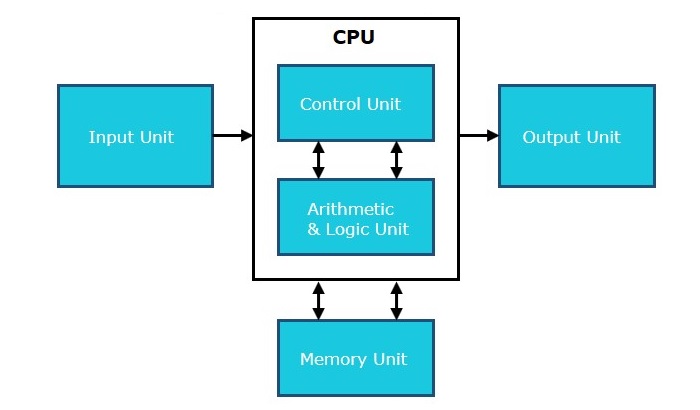
Central Processing Unit (CPU) consists of the following features −
CPU is considered as the brain of the computer.
CPU performs all types of data processing operations.
It stores data, intermediate results, and instructions (program).
It controls the operation of all parts of the computer.
CPU itself has following three components.
Memory or Storage Unit
Control Unit
ALU(Arithmetic Logic Unit)
Memory or Storage Unit
This unit can store instructions, data, and intermediate results. This unit supplies information to other units of the computer when needed. It is also known as internal storage unit or the main memory or the primary storage or Random Access Memory (RAM).
Its size affects speed, power, and capability. Primary memory and secondary memory are two types of memories in the computer. Functions of the memory unit are −
It stores all the data and the instructions required for processing.
It stores intermediate results of processing.
It stores the final results of processing before these results are released to an output device.
All inputs and outputs are transmitted through the main memory.
Control Unit
This unit controls the operations of all parts of the computer but does not carry out any actual data processing operations.
Functions of this unit are −
It is responsible for controlling the transfer of data and instructions among other units of a computer.
It manages and coordinates all the units of the computer.
It obtains the instructions from the memory, interprets them, and directs the operation of the computer.
It communicates with Input/Output devices for transfer of data or results from storage.
It does not process or store data.
ALU (Arithmetic Logic Unit)
This unit consists of two subsections namely,
Arithmetic Section
Logic Section
Arithmetic Section
Function of arithmetic section is to perform arithmetic operations like addition, subtraction, multiplication, and division. All complex operations are done by making repetitive use of the above operations.
Logic Section
Function of logic section is to perform logic operations such as comparing, selecting, matching, and merging of data.
सी पी यू का पूरा नाम क्या है?
CPU का पूरा नाम Central processing unit है, CPU को पुरे कंप्यूटर सिस्टम का मस्तिष्क (brain) कहा जाता है।
CPU क्या है?
CPU कंप्यूटर के सभी महत्वपूर्ण कार्य को संभालता है। यह कंप्यूटर में उपयोग किये जाने वाले हार्डवेयर और एक्टिव सॉफ्टवेयर के निर्देशों को प्राप्त करता है और आउटपुट प्रदर्शित करता है।
Central processing unit इनपुट डिवाइस और आउटपुट डिवाइस के बीच संबंध बनाये रखता है। यह ऑपरेटिंग सिस्टम और एप्लीकेशन सॉफ्टवेयर के सभी programs को अपनी मेमोरी में स्टोर करता है।
पहले आपने जाना की Central processing unit (CPU) को microprocessor कहा जाता है। Microprocessor दो इंच का ceramic square होता है जिसमें silicon chip होती है।
यह microprocessor chip या CPU, motherboard के CPU socket में फिट किया जाता है। CPU socket को heat sink की मदद से कवर किया जाता है, यह एक ऐसी वास्तु है जो CPU से गर्मी सोकती है।
आज कल के modern devices, laptops, mobile और tablet CPU की जगह System on chip (SoC) का उपयोग करते है। यह एक चिप है जिसमें CPU के साथ अन्य कम्पोनेंट्स होते है।
सी पी यू का कार्य क्या है?
वास्तव में CPU, इनपुट डिवाइस (कीबोर्ड, माउस, प्रिंटर आदि ) या कंप्यूटर प्रोग्राम से इनपुट लेता है, और जो निर्देश प्राप्त उसे व्याख्या (decode) करता है। फिर CPU मॉनिटर को सुचना आउटपुट करता है।
सी पी यू के घटक – Components of CPU
Full form of CPU parts
CU (Control unit)
ALU (Arithmetic logical unit)
Memory or Storage unit
CU
CU पूरा नाम Control Unit है। इसके द्वारा पूरे कंप्यूटर सिस्टम को control करने का कार्य जाता है। यह unit सीपीयू की महत्वपूर्ण unit होती है।
ALU
ALU पूरा नाम Arithmetic Logic Unit है। यह कंप्यूटर के प्रमुख unit होती है। इसके द्वारा कंप्यूटर में सभी गणितीय एवं लॉजिकल कार्य किए जाते हैं। यह प्रोसेसर के अंदर होती है।
आगे आप जानेंगे की मेमोरी क्या होती है और उसके प्रकार – What is computer memory? and Types of memory in computer
Memory – What is computer memory?
यह कंप्यूटर की स्टोरेज यूनिट है। यह कंप्यूटर का महत्वपूर्ण हिस्सा होता है। इसमें हम डाटा प्रोग्राम आदि को स्टोर करके रख सकते हैं। इसमें डाटा को बायनरी फॉर्मेट (0,1) में स्टोर किया जाता है। इसको नापने की साइज के आधार पर यूनिट है। जैसे Byte, Kilobyte, Megabyte, Gigabyte एवं Terabyte इसमें सबसे छोटी यूनिट byte एवं सबसे बड़ी यूनिट terabyte होती है।
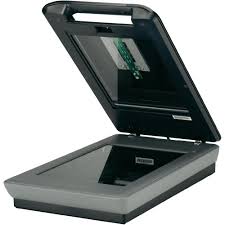
The scanner uses the pictures and pages of text as input. It scans the picture or a document. The scanned picture or document then converted into a digital format or file and is displayed on the screen as an output. It uses optical character recognition techniques to convert images into digital ones. Some of the common types of scanners are as follows:
Scanner एक Light को Page के ऊपर डालता है और फिर यह Light Reflect होकर उस Page का एक Image बनाती है. Scanner Light का इनपुट के रूप में प्रयोग करता है. इसके बाद स्कैनर Page को Digital Format में बदलकर उसे कंप्यूटर तक भेजता है.
Types of Scanner:
i) Flatbed Scanner:
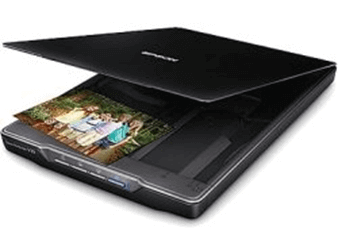
It has a glass pane and a moving optical CIS or CCD array. The light illuminates the pane, and then the image is placed on the glass pane. The light moves across the glass pane and scans the document and thus produces its digital copy. You will need a transparency adapter while scanning transparent slides.
ii) Handheld Scanner:
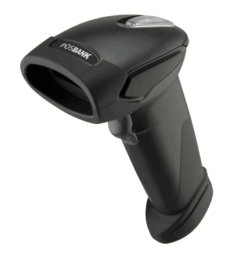
It is a small manual scanning device which is held by hand and is rolled over a flat image that is to be scanned. The drawback in using this device is that the hand should be steady while scanning; otherwise, it may distort the image. One of the commonly used handheld scanners is the barcode scanner which you would have seen in shopping stores.
iii) Sheetfed Scanner:
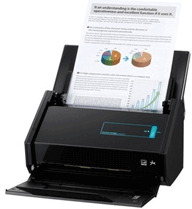
In this scanner, the document is inserted into the slot provided in the scanner. The main components of this scanner include the sheet-feeder, scanning module, and calibration sheet. The light does not move in this scanner. Instead, the document moves through the scanner. It is suitable for scanning single page documents, not for thick objects like books, magazines, etc.
iv) Drum Scanner:
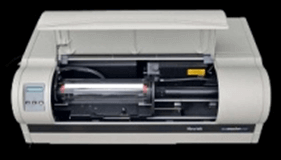
Drum scanner has a photomultiplier tube (PMT) to scan images. It does not have a charge-coupled device like a flatbed scanner. The photomultiplier tube is extremely sensitive to light. The image is placed on a glass tube, and the light moves across the image, which produces a reflection of the image which is captured by the PMT and processed. These scanners have high resolution and are suitable for detailed scans.
v) Photo Scanner:
It is designed to scan photographs. It has high resolution and color depth, which are required for scanning photographs. Some photo scanners come with in-built software for cleaning and restoring old photographs.
The mouse is a hand-held input device which is used to move cursor or pointer across the screen. It is designed to be used on a flat surface and generally has left and right button and a scroll wheel between them. Laptop computers come with a touchpad that works as a mouse. It lets you control the movement of cursor or pointer by moving your finger over the touchpad. Some mouse comes with integrated features such as extra buttons to perform different buttons.
The mouse was invented by Douglas C. Engelbart in 1963. Early mouse had a roller ball integrated as a movement sensor underneath the device. Modern mouse devices come with optical technology that controls cursor movements by a visible or invisible light beam. A mouse is connected to a computer through different ports depending on the type of computer and type of a mouse.
माउस
माउस को Pointing Device या Cursor Moving Device के नाम से भी जाना जाता है. माउस के द्वारा बिना कीबोर्ड के भी कंप्यूटर को नियंत्रित कर सकते हैं.
माउस से कर्सर को इधर – उधर Move कर सकते हैं और किसी ऑडियो, विडियो पर क्लिक करके उसे Play कर सकते हैं.
माउस में तीन बटन होते हैं Left Key, Right Key और Middle Key.
Left Key के द्वारा कंप्यूटर में किसी Icon, File, Folder को Select और Open करते हैं. जब Left Key को दो बार Press करते हैं तो उसे Double Click कहते हैं.
Right Key क्लिक करने से कंप्यूटर स्क्रीन पर Sub Menu Open होता है. Right Key एक बार Press करने को Right Click कहते हैं.
Middle Key इसे Scroll Button भी कहा जाता है इसकी मदद से कंप्यूटर Screen को Scroll करते हैं. यह Left और Right Key के बीच लगा छोटा गोल होता है.
Common types of the mouse:
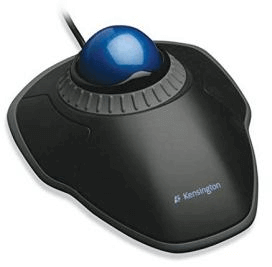
i) Trackball Mouse:
It is a stationary input device that has ball mechanism to move the pointer or cursor on the screen. The ball is half inserted in the device and can be easily rolled with finger, thumb or the palm to move the pointer on the screen. The device has sensor to detect the rotation of ball. It remains stationary; you don’t need to move it on the operating surface. So, it is an ideal device if you have limited desk space as you don’t need to move it like a mouse.
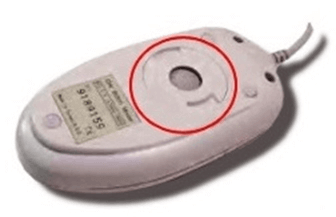
ii) Mechanical Mouse:
It has a system of a ball and several rollers to track its movement. It is a corded type of mouse. A mechanical mouse can be used for high performance. The drawback is that they tend to get dust into the mechanics and thus require regular cleaning.
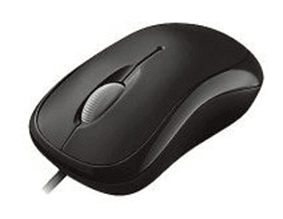
iii) Optical Mouse:
An optical mouse uses optical electronics to track its movement. It is more reliable than a mechanical mouse and also requires less maintenance. However, its performance is affected by the surface on which it is operated. Plain non-glossy mouse mat should be used for best results. The rough surface may cause problems for the optical recognition system, and the glossy surface may reflect the light wrongly and thus may cause tracking issues.
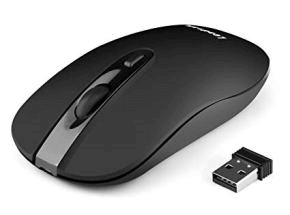
iv) Cordless or Wireless Mouse:
As the name suggests, this type of mouse lacks cable and uses wireless technology such as IrDA (infrared) or radio (Bluetooth or Wi-Fi) to control the movement of the cursor. It is used to improve the experience of using a mouse. It uses batteries for its power supply.
The keyboard is a basic input device that is used to enter data into a computer or any other electronic device by pressing keys. It has different sets of keys for letters, numbers, characters, and functions. Keyboards are connected to a computer through USB or a Bluetooth device for wireless communication.
कीबोर्ड
कंप्यूटर का एक प्रमुख इनपुट डिवाइस है, इसे प्राइमरी इनपुट डिवाइस भी कहते हैं. आप सभी लोग इस इनपुट डिवाइस के बारे में जानते ही होंगे.
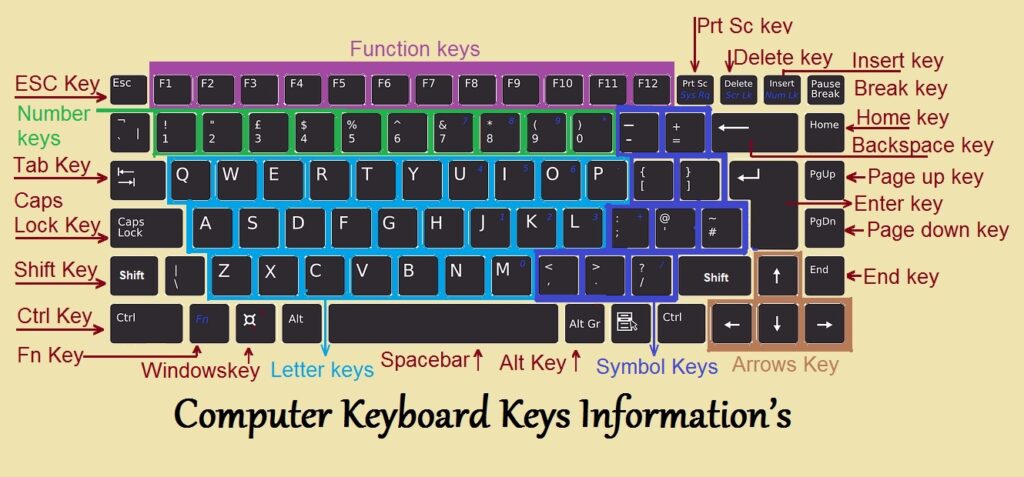
इसमें लगभग 108 Key होती है, कीबोर्ड के द्वारा कंप्यूटर को Typing करके Instruction देते हैं. कीबोर्ड में कई प्रकार की Key होती है जैसे Alphabetic Key ( A To Z ), Numeric Key ( 0 – 9 ), Symbolic Key ( @,#,&,% ), 4 Arrow Key, Function Key ( F1 To F12 ) और कुछ विशेष प्रकार की Key ( Atl, Tab, Ctrl ). इन सभी Key के द्वारा कंप्यूटर पर साधारण से लेकर विशेष प्रकार के कार्य कर सकते हैं. कीबोर्ड एक महत्वपूर्ण इनपुट डिवाइस है
Types of keyboards: There can be different types of keyboards based on the region and language used. Some of the common types of keyboards are as follows:
i) QWERTY Keyboard:
QWERTY Keyboard:
It is the most commonly used keyboard with computers in modern times. It is named after the first six letters of the top row of buttons and is even popular in countries that do not use Latin-based alphabet. It is so popular that some people think that it is the only type of keyboard to use with computers as an input device.
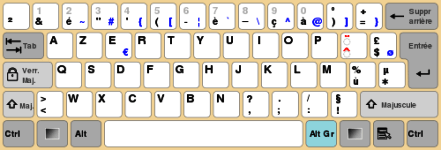
ii) AZERTY Keyboard:
ii) AZERTY Keyboard:
It is considered the standard French keyboard. It is developed in France as an alternative layout to the QWERTY layout and is mainly used in France and other European countries. Some countries have manufactured their own versions of AZERTY.
Its name is derived from the first six letters that appear on the top left row of the keyboard. The Q and W keys in AZERTY keyboard are interchanged with A and Z keys in QWERTY keyboard. Furthermore, in AZERTY keyboard M key is located to the left of the L key.
AZERTY keyboard differs from QWERTY keyboard not only in the placement of letters but also in many other ways, e.g., it gives emphasis on accents, which is required for writing European languages like French.
iii) DVORAK Keyboard:
iii) DVORAK Keyboard:
This type of keyboard layout was developed to increase the typing speed by reducing the finger movement while typing. The most frequently used letters are kept in a home row to improve typing.
Listing of non-alphanumeric keys
Key/symbol
Explanation
Windows
PC keyboards have a Windows key that looks like a four-pane, wavy window.
Command
Apple Mac computers have a Command with a symbol resembling a cloverleaf.
Menu
PC keyboards also have a Menu key that looks like a cursor pointing to a menu.
Esc
Esc (escape) key.
F1 – F12
What are the F1 through F12 keys?
F13 – F24
Information about the F13 through F24 keyboard keys.
Tab
Tab key.
Caps lock
Caps lock key.
Shift
Shift key.
Ctrl
Control key.
Fn
Function key.
Alt
Alternate key (PC only; Mac users have an Option key).
Spacebar
Spacebar key.
Arrows
Up, down, left, right Arrow keys.
Back Space
Back space (or Backspace) key.
Delete
Delete or Del key.
Enter
Enter key.
Prt Scrn
Print Screen key.
Scroll Lock
Scroll Lock key.
Pause
Pause key.
Break
Break key.
Insert
Insert key.
Home
Home key.
Page up
Page up or pg up key.
Page down
Page down or pg dn key.
End
End key.
Num Lock
Num Lock key.
~
Tilde.
`
Acute, back quote, grave, grave accent, left quote, open quote, or a push.
!
Exclamation mark, exclamation point, or bang.
@
Ampersat, arobase, asperand, at, or at symbol.
#
Octothorpe, number, pound, sharp, or hash.
£
Pound Sterling or Pound symbol.
€
Euro.
$
Dollar sign or generic currency.
¢
Cent sign.
¥
Chinese/Japanese Yuan.
§
Micro or section.
%
Percent.
°
Degree.
^
Caret or circumflex.
&
Ampersand, epershand, or and symbol.
*
Asterisk, mathematical multiplication symbol, and sometimes called a star.
(
Open or left parenthesis.
)
Close or right parenthesis.
–
Hyphen, minus, or dash.
_
Underscore.
+
Plus.
=
Equal.
{
Open brace, squiggly brackets, or curly bracket.
}
Close brace, squiggly brackets, or curly bracket.
[
Open bracket.
]
Closed bracket.
|
Pipe, or, or vertical bar.
\
Backslash or reverse solidus.
/
Forward slash, solidus, virgule, whack, and mathematical division symbol.
Input device enables the user to send data, information, or control signals to a computer. The Central Processing Unit (CPU) of a computer receives the input and processes it to produce the output.
कंप्यूटर के इनपुट डिवाइस वे पार्ट होते हैं जिनके द्वारा हम कंप्यूटर को निर्देश देते हैं कि उसे क्या करना है, जैसे कीबोर्ड, माउस. स्कैनर आदि |